How the Netherlands Supports Vietnam's Sustainable Development Goals
A Partnership Built on Shared Priorities
The Netherlands and Vietnam have developed one of Southeast Asia's most substantive bilateral development partnerships, grounded in shared environmental vulnerabilities and a mutual commitment to the UN Sustainable Development Goals. Both countries sit in low-lying river deltas, both face existential pressure from rising sea levels, and both have economies deeply tied to agriculture and water. That geographic and economic symmetry is not coincidental — it shapes the entire logic of the partnership.
Formal cooperation between the two countries stretches back decades, but the relationship gained sharper focus after Vietnam adopted its SDG-aligned national agenda and the Netherlands repositioned its development cooperation around thematic expertise rather than broad aid transfers. Today, the bilateral relationship operates through government-to-government agreements, Dutch embassy programs, private sector joint ventures, and academic exchanges — all pointing toward the same cluster of SDG priorities: clean water, sustainable food systems, climate adaptation, and quality education.
What distinguishes this partnership is its collaborative framing. The Netherlands does not position itself as a benefactor. Dutch institutions bring technical expertise that Vietnamese counterparts need; Vietnamese institutions offer scale, local knowledge, and a dynamic policy environment that Dutch researchers and companies find genuinely valuable. The relationship runs in both directions.
Water Management and Climate Resilience in the Mekong Delta
Dutch water management expertise is the most visible and strategically significant contribution the Netherlands makes to Vietnam's SDG progress. The Mekong Delta — home to roughly 17 million people and responsible for more than half of Vietnam's rice production — faces compounding threats: saltwater intrusion, land subsidence, seasonal flooding, and reduced upstream water flow caused by hydropower development in neighboring countries.
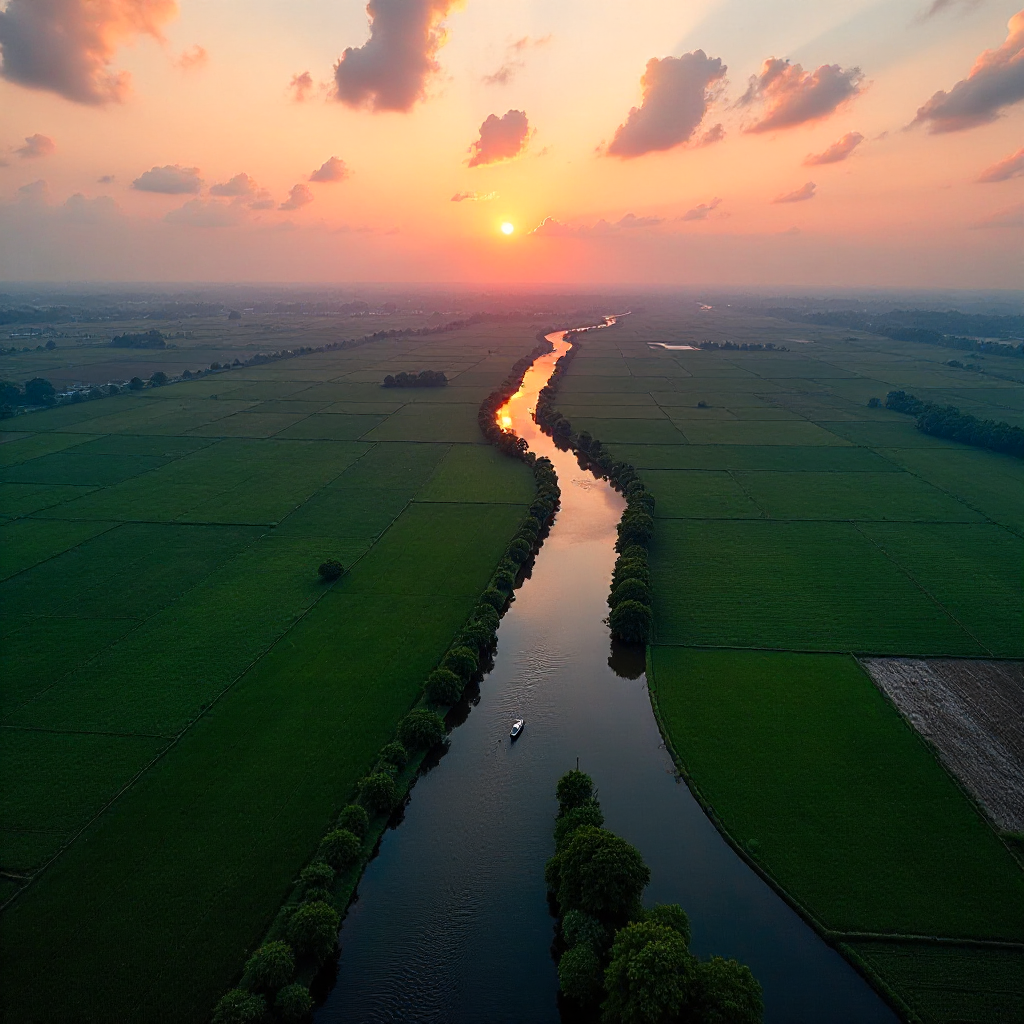
The Netherlands has deep institutional experience managing comparable challenges in its own Rhine-Meuse-Scheldt delta system. Dutch engineering firms, water authorities, and research institutes have translated that experience into a long-term engagement with Vietnam's Ministry of Agriculture and Rural Development and the Ministry of Natural Resources and Environment. Key areas of focus include integrated water resource management, delta planning, flood risk modeling, and the design of nature-based solutions that reduce infrastructure costs while improving ecological resilience.
The Mekong Delta Plan, developed with substantial Dutch technical input, represents one of the most ambitious regional climate adaptation frameworks in Asia. It reframes the delta not as a region to be defended against water, but as one that must learn to live with water — a conceptual shift that mirrors the Dutch philosophy behind projects like Room for the River. Implementing this vision directly advances SDG 13 (Climate Action), SDG 6 (Clean Water and Sanitation), and SDG 11 (Sustainable Cities and Communities).
Sustainable Agriculture and Food Security
Dutch involvement in Vietnamese agri-food systems goes well beyond technical assistance — it connects Vietnam's agricultural sector to global sustainability standards and export markets. The Netherlands, despite its small size, is the world's second-largest agricultural exporter by value, and that expertise in high-efficiency, low-footprint farming has direct relevance for Vietnam's food security challenges.
Collaboration in this area spans several dimensions. Dutch agri-technology companies have established demonstration projects in vegetable production, aquaculture, and horticulture, introducing precision irrigation, greenhouse technology, and integrated pest management. These are not pilot projects that disappear after a funding cycle — many have been absorbed into Vietnamese farming practice and government extension programs.
On the policy side, Dutch development programs have supported Vietnam in building food safety certification systems and traceability infrastructure, which are prerequisites for accessing premium export markets in Europe. This directly serves SDG 2 (Zero Hunger) and SDG 12 (Responsible Consumption and Production) by improving both domestic food security and the economic sustainability of Vietnamese farming communities. The agri-food partnership also connects to climate resilience: shifting from flood-dependent rice monoculture toward diversified, drought-tolerant crops is both an economic and an environmental imperative for the Mekong region.
Education and Capacity Building as a Development Tool
Knowledge transfer sits at the heart of how the Netherlands supports Vietnam's long-term SDG capacity. Scholarships, institutional partnerships, and professional training programs build the human capital that makes every other form of cooperation sustainable after Dutch funding ends.
The Orange Knowledge Programme (OKP) is the flagship instrument for this work. Funded by the Dutch Ministry of Foreign Affairs, OKP provides short courses and tailor-made training for mid-career professionals from partner countries, including Vietnam. Eligible participants typically work in government agencies, universities, research institutions, or NGOs in sectors aligned with Dutch development priorities — water, agriculture, food security, and health. The program is explicitly designed to strengthen institutional capacity rather than just individual skills, which means participants are expected to apply and share their learning within their home organizations.
Beyond OKP, the Nuffic Neso Vietnam office supports Vietnamese students and institutions navigating the Dutch higher education landscape. Vietnamese universities have established formal partnerships with Dutch institutions including Wageningen University & Research (a global leader in life sciences and agriculture), IHE Delft Institute for Water Education, and several Dutch universities of applied sciences. These partnerships enable joint research, faculty exchanges, and curriculum development that gradually embed Dutch methodological approaches into Vietnamese academic culture.
This dimension of the partnership directly advances SDG 4 (Quality Education) and SDG 17 (Partnerships for the Goals), and it has a multiplier effect: every Vietnamese professional trained in Dutch water or agricultural methods becomes a node in a wider knowledge network.
Private Sector and Innovation Partnerships
Government programs and scholarships tell only part of the story. Dutch private sector engagement in Vietnam has grown significantly, and much of it carries an explicit sustainability dimension that aligns with SDG delivery.
Dutch companies operating in Vietnam — particularly in water infrastructure, agri-technology, logistics, and energy — often work alongside local partners and government counterparts rather than operating independently. This co-investment model is partly practical (local knowledge reduces risk) and partly strategic: Dutch trade and development policy increasingly ties market access support to sustainability standards, which means Dutch businesses entering Vietnam have an incentive to demonstrate positive environmental and social impact.
Research collaboration is another growing channel. Dutch universities and applied research institutes have co-funded studies on topics ranging from mangrove restoration in the Mekong Delta to urban flood resilience in Ho Chi Minh City. These projects generate knowledge that is genuinely useful to Vietnamese policymakers while also advancing the research agendas of Dutch institutions. The Wageningen University & Research partnership network in Vietnam is a good example of how academic and private sector interests can align around shared sustainability objectives.
Aligning with Vietnam's National Development Agenda
Dutch support does not operate in a vacuum — it is deliberately calibrated to reinforce Vietnam's own policy frameworks. This alignment is what gives the partnership its durability and political legitimacy within Vietnam.
Vietnam's National Green Growth Strategy, updated in 2021 with a horizon to 2050, sets ambitious targets for reducing carbon intensity, expanding renewable energy, and transitioning to circular economic models. Dutch expertise in offshore wind, circular agriculture, and low-carbon urban planning maps directly onto these national priorities. Similarly, Vietnam's SDG Voluntary National Reviews have consistently identified water security, climate adaptation, and sustainable agriculture as areas requiring international technical cooperation — exactly the domains where Dutch engagement is concentrated.
This alignment matters practically. When Dutch programs reinforce existing Vietnamese government priorities rather than introducing parallel structures, they are more likely to be absorbed into national systems, funded through domestic budgets after project periods end, and scaled beyond their initial scope. The Netherlands Embassy in Hanoi plays an active role in ensuring this coherence, working closely with Vietnamese ministries to identify where Dutch expertise can fill genuine gaps rather than duplicating what Vietnamese institutions already do well.
How to Engage — Opportunities for Vietnamese Students and Professionals
For Vietnamese students, academics, and professionals, the Netherlands–Vietnam partnership opens several concrete pathways — each suited to different career stages and institutional contexts.
- Orange Knowledge Programme (OKP): Mid-career professionals employed in eligible sectors can apply for fully funded short courses and tailor-made training programs at Dutch institutions. Eligibility criteria focus on sector alignment and the applicant's capacity to apply learning within their home organization. Applications open annually through the Nuffic Study in Holland platform.
- Holland Scholarship: A partial scholarship for Vietnamese students pursuing a full Bachelor's or Master's degree at a Dutch university. It is intended to complement other funding sources rather than cover full costs, so applicants should plan financing carefully.
- Wageningen University & Research programs: For those working in agriculture, food science, or environmental management, WUR offers both degree programs and professional development courses with strong relevance to Vietnamese SDG challenges. Many Vietnamese alumni maintain active research connections after returning home.
- IHE Delft: The world's largest international graduate water education institute offers Master's programs and short courses specifically designed for water professionals from developing countries. Given the Mekong Delta's centrality to Dutch-Vietnamese cooperation, this is a particularly strategic pathway for Vietnamese water sector professionals.
- Institutional partnerships: Vietnamese universities seeking to formalize cooperation with Dutch counterparts can approach Nuffic Neso Vietnam for guidance on establishing memoranda of understanding, joint research frameworks, or curriculum development projects.
One practical note: competition for OKP and Holland Scholarship funding is genuine. Applications that clearly articulate how the training connects to institutional priorities — not just personal development — tend to be stronger. Consulting services that help Vietnamese applicants frame their proposals within the SDG and Green Growth Strategy context can meaningfully improve outcomes.
Frequently Asked Questions
Which SDGs does the Netherlands specifically focus on in Vietnam?
Dutch cooperation in Vietnam concentrates on SDG 2 (Zero Hunger), SDG 4 (Quality Education), SDG 6 (Clean Water and Sanitation), SDG 13 (Climate Action), and SDG 17 (Partnerships for the Goals). Water management, sustainable agriculture, and climate resilience in the Mekong Delta are the primary thematic anchors.
What scholarships does the Netherlands offer for Vietnamese professionals?
The main instruments are the Orange Knowledge Programme (for mid-career professionals seeking short courses or tailor-made training) and the Holland Scholarship (partial funding for degree students). Both are administered through Nuffic and require applicants to demonstrate sector relevance and institutional backing.
How does Dutch water management expertise apply to Vietnamese conditions?
The Netherlands has managed complex delta systems — including saltwater intrusion, flooding, and land subsidence — for centuries. These challenges closely mirror conditions in the Mekong Delta, making Dutch approaches to integrated water resource management, nature-based solutions, and delta planning directly transferable, though always adapted to local ecological and social contexts.
Can Vietnamese universities partner with Dutch institutions through official programs?
Yes. Nuffic Neso Vietnam supports institutional partnerships between Vietnamese and Dutch universities. These can take the form of joint research projects, faculty exchanges, curriculum development, or formal memoranda of understanding. Wageningen University & Research and IHE Delft are among the most active Dutch partners for Vietnamese institutions.
What is the Orange Knowledge Programme and who is eligible?
The Orange Knowledge Programme (OKP) is a Dutch government-funded initiative that provides short courses and tailor-made training for professionals from partner countries, including Vietnam. Eligible participants are mid-career professionals employed in government, academia, research, or civil society in sectors aligned with Dutch development priorities. The program prioritizes institutional impact — applicants must demonstrate how their training will benefit their home organization, not just their individual career.