The Role of Dutch Expertise in Vietnam’s Infrastructure Development
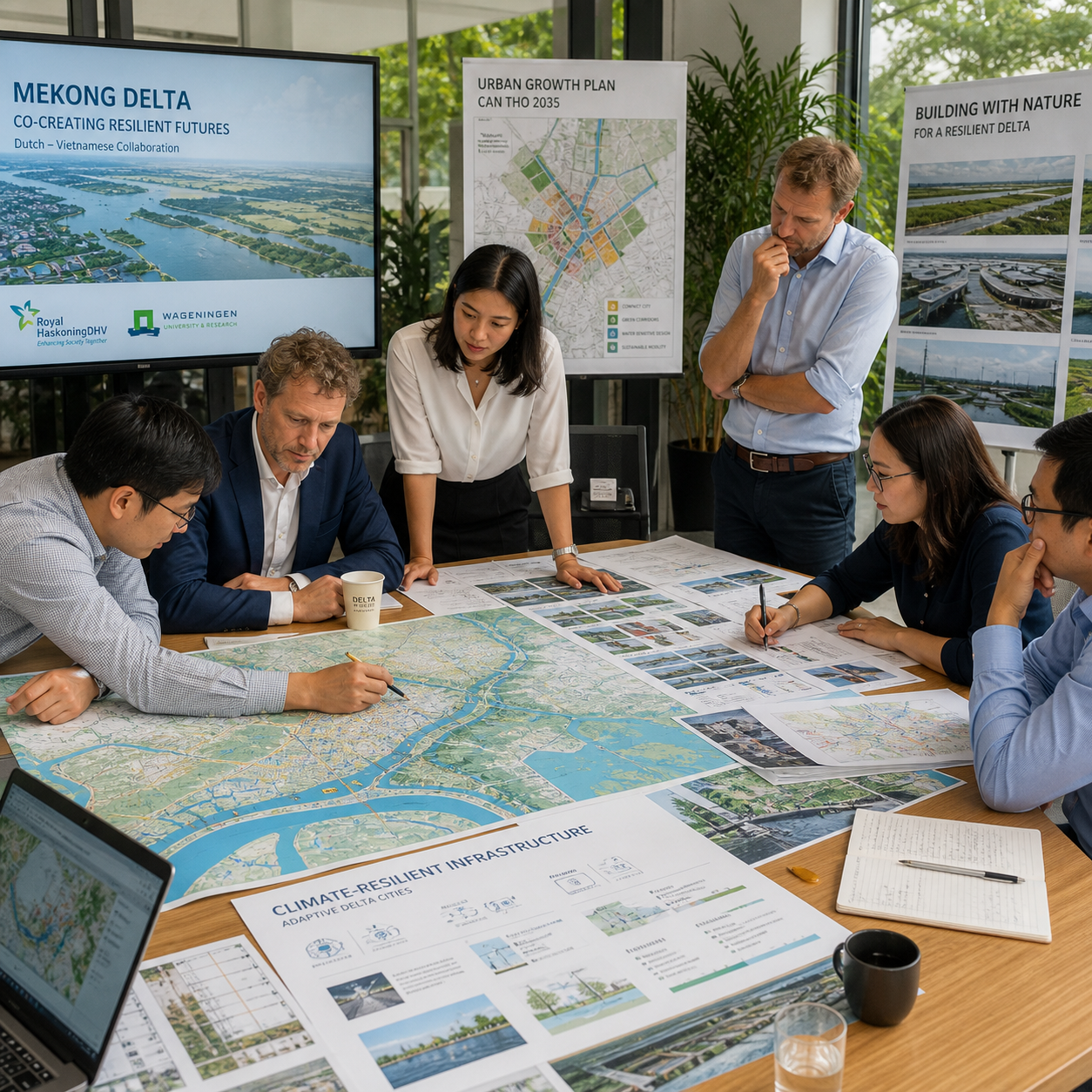
Dutch expertise can contribute to Vietnam’s infrastructure development by combining water management, spatial planning, climate adaptation, and institutional cooperation. Its greatest value lies in helping Vietnamese partners develop solutions that fit local geography, governance, financing, and community needs.
Vietnam’s infrastructure agenda is broad. It includes transport connectivity, urban services, industrial growth, housing, water security, and protection from climate-related hazards. International cooperation can support these priorities when it focuses on shared learning and durable local capacity rather than importing ready-made models.
Vietnam’s Infrastructure Priorities and Development Challenges
Vietnam’s infrastructure priorities center on connecting a growing economy while making cities, river basins, and coastal areas more resilient. Rapid urbanization, regional differences, environmental pressures, and climate risks make long-term planning essential.
Major urban areas such as Ho Chi Minh City, Hanoi, Da Nang, and Can Tho face different infrastructure pressures. Urban expansion increases demand for roads, public transport, drainage, housing, wastewater treatment, and reliable water services. Industrial zones and logistics corridors also require infrastructure that can support economic activity without placing excessive pressure on land, ecosystems, or existing communities.
Water is a particularly important part of Vietnam’s development challenge. The country’s river deltas and coastal regions support agriculture, settlements, ports, and industry, yet they are exposed to flooding, salinity intrusion, erosion, subsidence, and changing rainfall patterns. These risks do not affect every province in the same way. A measure that works in a dense urban district may be unsuitable for a rural floodplain or a coastal farming community.
Infrastructure decisions must therefore consider both immediate service delivery and long-term resilience. A new road, drainage system, port, or urban district can create economic opportunity, but poor coordination may also increase flood exposure, fragment ecosystems, or raise maintenance costs. This is why integrated planning is increasingly relevant to Vietnam’s infrastructure development.
Why Dutch Expertise Is Relevant to Vietnam
Dutch expertise is relevant because the Netherlands has developed extensive experience in managing water, land use, urban growth, and infrastructure in a densely populated delta environment. That experience offers useful methods, although it cannot be transferred to Vietnam without careful adaptation.
The Netherlands is widely associated with integrated water management: coordinating flood protection, drainage, freshwater supply, navigation, agriculture, nature, and urban development. The approach treats water as a central planning factor rather than an issue addressed only after construction decisions have been made.
This perspective can support Vietnamese institutions as they assess competing infrastructure options. For example, a flood-management strategy might combine upgraded drainage, retention areas, river restoration, building controls, emergency planning, and community-based preparedness. In some locations, engineered defenses may be appropriate. In others, preserving flood space or improving land-use planning may offer better value over the infrastructure’s full life cycle.
Dutch experience also emphasizes the relationship between technical systems and public institutions. Infrastructure resilience depends on clear responsibilities, reliable data, maintenance budgets, enforcement, and coordination across administrative boundaries. Choosing Dutch expertise for these benefits means accepting a limitation: technical advice alone cannot resolve fragmented governance, land pressures, or difficult financing decisions.
Organizations such as the Government of the Netherlands describe water management as a field that combines policy, engineering, spatial planning, and environmental stewardship. That combination helps explain why Dutch–Vietnamese cooperation can extend beyond construction into policy dialogue, training, research, and institutional strengthening.
Key Areas of Dutch–Vietnamese Infrastructure Cooperation
Dutch–Vietnamese infrastructure cooperation can focus on delta planning, flood resilience, urban infrastructure, transport connectivity, and sustainable spatial development. The strongest programs connect these areas instead of treating them as isolated technical sectors.
Delta planning and water management
Delta planning brings together river-basin management, coastal protection, agriculture, settlement patterns, ecosystems, and economic activity. Dutch partners can contribute planning tools, scenario analysis, hydrological expertise, and experience with multi-agency decision-making.
Vietnamese partners may use this knowledge to compare different development pathways. A scenario could examine how urban expansion, groundwater extraction, sea-level rise, upstream water regulation, and changes in agricultural production interact over several decades. The purpose is not to predict one fixed future, but to identify decisions that remain useful under changing conditions.
Flood resilience and climate adaptation
Climate adaptation involves reducing exposure and vulnerability while improving the ability to recover from disruption. Cooperation may include flood-risk mapping, early-warning systems, resilient building standards, drainage planning, nature-based measures, and emergency response.
Nature-based solutions, such as restored wetlands, mangrove protection, retention landscapes, and permeable urban surfaces, can complement conventional structures. They may deliver environmental benefits, but they also require land, monitoring, institutional coordination, and community participation. They are not a universal substitute for dikes, pumps, reservoirs, or engineered drainage.
Urban infrastructure and sustainable spatial planning
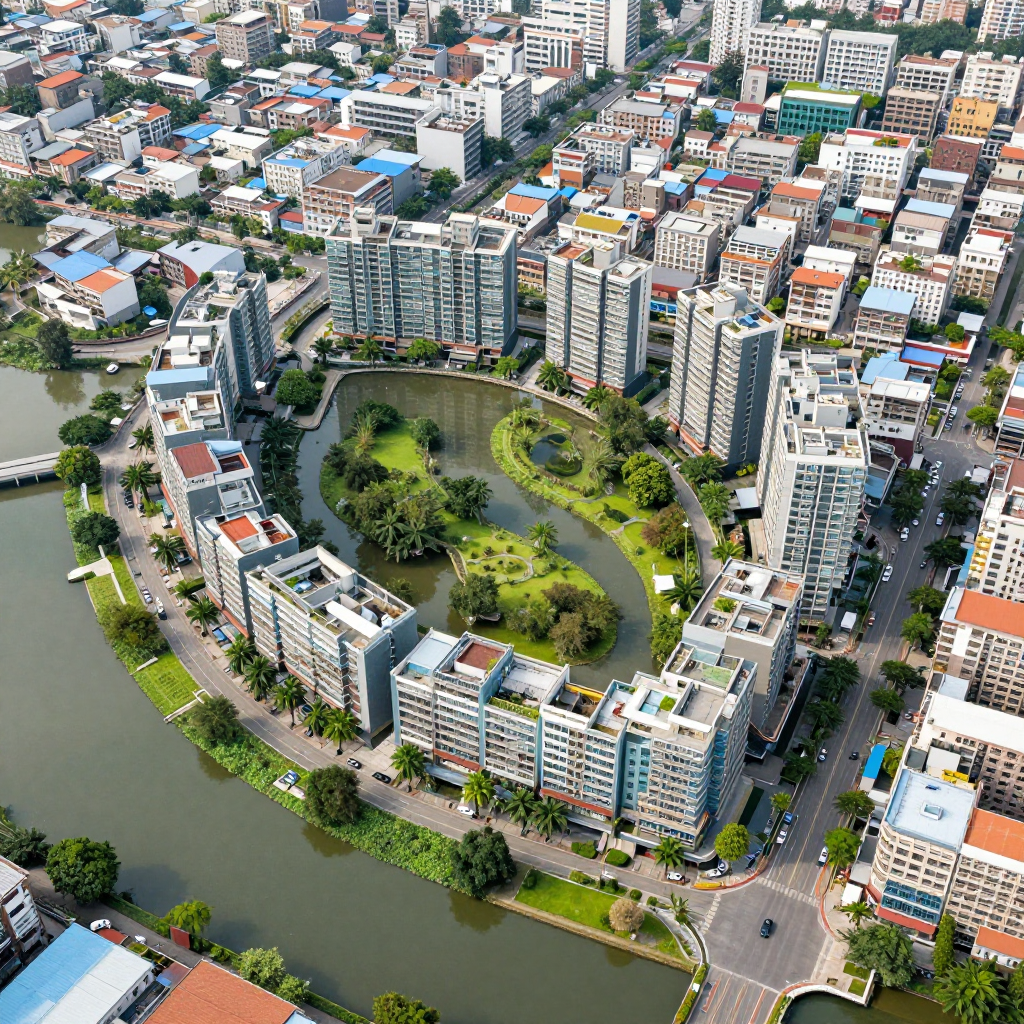
In rapidly growing Vietnamese cities, Dutch expertise can support integrated urban planning that links housing, transport, water, public space, energy, and waste systems. This approach helps prevent infrastructure networks from being designed separately and later forced to work together.
Planning can also examine who benefits from investment. New transport corridors may improve access to jobs, yet rising land values or relocation can disadvantage lower-income households. Sustainable urban development therefore requires transparent consultation, social safeguards, accessible public services, and attention to informal or underserved settlements.
Transport connectivity
Transport cooperation may cover ports, inland waterways, logistics, roads, rail, and public transport. Dutch knowledge is especially relevant where transport planning intersects with water systems, land-use decisions, and compact urban development.
A technically efficient transport project still needs realistic demand forecasts, land acquisition plans, operating budgets, safety standards, and long-term maintenance. Infrastructure connectivity creates lasting value only when institutions can operate and maintain the systems after external advisers leave.
From Technical Knowledge to Practical Implementation
Effective cooperation turns technical knowledge into implementation through feasibility studies, capacity building, pilot projects, institutional support, technology exchange, and local participation. Each step should connect to a Vietnamese decision, budget, regulation, or operating responsibility.
A practical cooperation cycle can follow six stages:
- Define the shared problem: Identify the infrastructure risk or service gap using local data and the priorities of responsible authorities.
- Build a joint evidence base: Combine Vietnamese administrative knowledge, community experience, engineering analysis, environmental information, and Dutch technical methods.
- Compare options: Assess capital costs, maintenance requirements, land impacts, social consequences, emissions, and performance under different climate scenarios.
- Test through a pilot: Use a limited project to examine whether a planning method, monitoring system, or design standard works in local conditions.
- Strengthen institutions: Train staff, clarify mandates, improve data systems, and develop procedures that remain useful after the project ends.
- Scale with accountability: Expand successful approaches only after reviewing evidence, implementation barriers, and feedback from affected communities.
Capacity building should involve more than short workshops. It can include joint research, secondments, university partnerships, professional certification, operational manuals, and mentoring between agencies. Technology exchange also works best when Vietnamese institutions can manage, repair, update, and finance the technology independently.
Public-private partnerships may help mobilize investment and specialized expertise, particularly in transport, water services, ports, and urban utilities. They also require careful contracts, transparent procurement, service-quality indicators, and clear allocation of construction, demand, currency, and climate risks. A partnership should be judged by public value, not only by the speed of financial closure.
The Importance of Local Context and Vietnamese Ownership
Vietnamese ownership is essential because infrastructure solutions must fit local governance structures, communities, geography, financing conditions, and development priorities. Dutch approaches should guide questions and strengthen choices, rather than prescribe a single national model.
Vietnam’s regions differ in hydrology, economic structure, population density, land use, and administrative capacity. The Mekong Delta, Red River Delta, central coast, highlands, and major metropolitan areas face distinct combinations of risk and opportunity. Even neighboring districts may require different approaches because of elevation, drainage capacity, settlement patterns, or livelihood systems.
Local context also includes informal knowledge. Residents often understand flood pathways, seasonal water behavior, access barriers, and maintenance problems that are absent from official maps. Including communities early can improve design and reveal social impacts before they become expensive disputes.
Common mistakes can weaken otherwise promising partnerships:
- Copying a Dutch model unchanged: Partners may assume that a successful approach in the Netherlands will perform identically in Vietnam. The correction is to test assumptions against local hydrology, law, institutions, and social conditions.
- Measuring success by construction alone: A completed asset can still fail if operating agencies lack staff, funding, or authority. Agreements should include maintenance and performance indicators from the start.
- Consulting communities too late: Late consultation can increase redesign costs and reduce trust. Participation should begin during problem definition and option selection.
- Leaving knowledge in external reports: A detailed study has limited value if local teams cannot use its models, data, and recommendations. Joint production and practical training improve knowledge retention.
Building More Sustainable and Resilient Infrastructure Through Partnerships
International partnerships can build more sustainable and resilient infrastructure when they combine physical investment with environmental responsibility, inclusive planning, and stronger institutions. The goal is infrastructure that continues to provide value under economic, social, and climate pressures.
Resilience should be assessed across the full infrastructure life cycle. Planning teams can ask whether a project can withstand hazards, whether it can be repaired quickly, how much energy and water it consumes, and whether its benefits reach vulnerable groups. They should also examine unintended effects, such as transferring flood risk to another district or encouraging development in exposed areas.
Cooperation between government agencies, municipalities, research institutions, businesses, development organizations, and communities can improve these assessments. Government provides policy direction and public accountability. Universities contribute research and independent evaluation. Businesses bring design, construction, operational, and financing capabilities. Communities test whether proposed solutions work in daily life.
Long-term sustainability also depends on financing. Capital investment may attract attention, while routine maintenance receives less visibility. Yet pumps, drainage channels, monitoring stations, public transport systems, and flood defenses all require predictable budgets and responsible operators. Dutch–Vietnamese cooperation can help develop investment plans that account for maintenance, renewal, and climate uncertainty rather than focusing only on initial construction.
What Effective International Cooperation Should Deliver
Effective international cooperation should deliver shared objectives, measurable outcomes, local capacity, retained knowledge, strong coordination, and regular evaluation. These criteria help distinguish a durable partnership from a short technical assignment.
Before activities begin, partners should agree on the problem being addressed and the decisions the cooperation must support. A useful framework is the six-part partnership test:
- Purpose: Are the objectives linked to Vietnam’s infrastructure and development priorities?
- People: Are responsible agencies, technical institutions, businesses, and affected communities involved?
- Place: Has the approach been adapted to the specific Vietnamese region, watershed, city, or corridor?
- Performance: Are outcomes measured through service quality, resilience, inclusion, environmental impact, and financial sustainability?
- Persistence: Can Vietnamese institutions maintain the systems, skills, data, and procedures after the program ends?
- Public accountability: Are decisions, risks, trade-offs, procurement, and results transparent enough to build trust?
For policymakers and development organizations, the practical lesson is clear: knowledge transfer should be treated as an outcome, not an activity. A training session is useful only when participants can apply the knowledge. A feasibility study matters when it improves a real investment or policy decision. A pilot deserves expansion only when evidence shows that it is affordable, maintainable, and appropriate for the communities concerned.
Dutch expertise can make a meaningful contribution to Vietnam’s infrastructure development, particularly in water management, delta planning, climate adaptation, sustainable urban development, and resilient infrastructure. Its success will depend on mutual learning, Vietnamese leadership, careful adaptation, and sustained attention to institutions and maintenance.
Frequently Asked Questions
What areas of infrastructure can Dutch expertise support in Vietnam?
Dutch expertise can support water management, delta planning, flood resilience, climate adaptation, urban infrastructure, transport connectivity, ports, logistics, spatial planning, wastewater, and nature-based solutions. The relevant mix depends on local conditions and Vietnamese priorities.
Why is Dutch water-management knowledge relevant to Vietnam?
Dutch water-management knowledge is relevant because both countries include densely populated delta and coastal areas where water, land use, agriculture, cities, and economic activity interact. The Netherlands offers useful planning experience, but Vietnamese hydrology, institutions, and communities must determine how that knowledge is applied.
How can international infrastructure cooperation benefit local communities?
International infrastructure cooperation can improve flood safety, transport access, water services, livelihoods, public health, and urban quality of life. Benefits are more likely when communities participate early, social impacts are assessed, and projects include reliable operations and maintenance.
What makes a Dutch–Vietnamese infrastructure partnership effective?
An effective partnership has shared objectives, Vietnamese ownership, transparent roles, local stakeholder participation, realistic financing, measurable outcomes, knowledge retention, and continued evaluation. It combines Dutch expertise with Vietnamese institutional and community knowledge rather than treating either perspective as sufficient on its own.