Vocational Training Opportunities in the Vietnam–Netherlands Framework
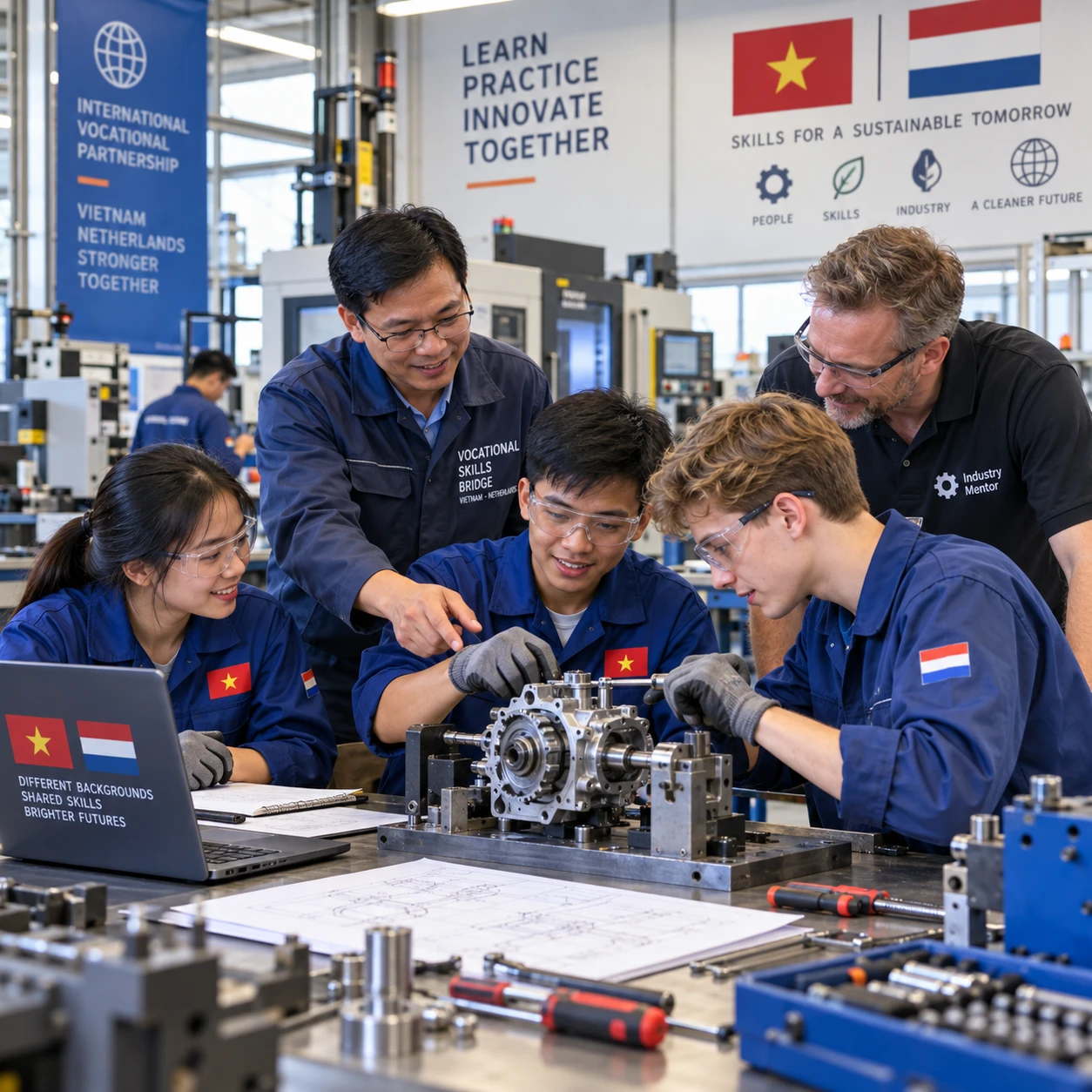
Vocational training opportunities within the Vietnam–Netherlands framework can take different forms, from learner training and trainer development to institutional partnerships. The exact offers depend on the organizations involved and should be confirmed with the relevant institution or program before anyone applies.
For learners, the key question is whether a current opportunity matches their skills goals and eligibility. For training institutions and employers, it is whether cooperation can connect curriculum, practical learning, and workforce needs. Understanding that distinction helps people find credible options without assuming that a particular course, scholarship, or deadline is available.
What the Vietnam–Netherlands framework can mean for vocational training
Vietnam–Netherlands cooperation can support vocational education and training by bringing institutions, employers, and other partners together to strengthen technical and vocational skills. The framework describes a space for collaboration, not a single guaranteed program or one universal route for applicants.
Cooperation may focus on improving how skills are taught and assessed. Partners might share approaches to curriculum development, instructor training, equipment use, workplace assessment, or links between training and employment. These activities can help training providers respond to changes in technology and industry, while giving learners more relevant preparation for work.
It is useful to separate two kinds of opportunity:
- Learner-facing opportunities, such as a course, practical placement, exchange, or short training activity, if a partner currently offers one.
- Institutional cooperation, such as curriculum design, trainer development, technical advice, or a partnership between a vocational school and an employer.
These routes may overlap, but they are not interchangeable. A project that supports a school’s training capacity does not automatically provide places, funding, or travel for individual learners. Check the named partners and the stated purpose of any initiative before treating it as an application opportunity.
Potential training fields and skills areas
Potential training fields depend on the participating institutions, employers, and project goals. Readers can identify relevant sectors by checking current partner information and comparing its stated skills needs with their own interests or workforce requirements.
Vocational cooperation may address technical skills in fields such as manufacturing, engineering, logistics, agriculture, food processing, construction, energy, hospitality, or digital services. These are examples of sectors where practical training can be relevant, not confirmation that a Vietnam–Netherlands program currently offers courses in each one.
Look beyond a course title. A useful description explains what a participant will be able to do, how that ability will be assessed, and what kind of practice is included. For example, a technical course might combine classroom instruction with equipment-based exercises and a supervised workplace task. The value depends on whether the tools, safety standards, and assessment reflect the work participants expect to do.
Compare potential opportunities using three questions:
- Skill: What specific technical or vocational competency will the training develop?
- Practice: Does the format include a workshop, simulation, work-based learning, or employer input?
- Recognition: Who issues any certificate or record of completion, and what does it demonstrate?
Short courses can be easier to fit around work, but may cover fewer competencies. Longer programs can provide deeper practice, though they require more time and may have additional costs. Confirm the format before deciding which trade-off suits you.
How institutions and employers can collaborate
Vocational institutions and employers can collaborate by designing relevant curricula, developing trainers, and connecting instruction with practical workplace learning. The strongest partnerships define each organization’s contribution and agree on how to measure results.
Curriculum development is one starting point. A training institution can map learning outcomes to actual job tasks, while employers can explain changing equipment, safety expectations, and entry-level skill gaps. The institution remains responsible for coherent teaching and assessment; an employer’s input should inform the course rather than replace sound educational design.
Partners may also invest in trainers and skills development. Options include instructor exchanges, technical workshops, shared teaching materials, or professional development in assessment methods. A new curriculum is unlikely to last if instructors lack time, equipment, or preparation to teach it. Planning for trainer support and ongoing updates is therefore as important as drafting course content.
Work-based learning can give participants supervised experience in a real workplace, where appropriate. Institutions and employers should agree on tasks, supervision, safety responsibilities, schedules, and feedback. A placement without defined learning outcomes can become routine labor rather than training, so partners should establish what learners will practice and how progress will be reviewed.
Before starting a partnership, put the basics in writing: intended participants, roles, resources, training outcomes, assessment, and a review process. This helps prevent mismatched expectations, especially when partners have different calendars, funding arrangements, or definitions of success.
Who may benefit from these opportunities
Potential beneficiaries include learners, vocational training providers, employers, and other cooperation partners, but each group should look for a different type of opportunity. A partnership designed for institutional capacity building may benefit learners over time without accepting individual applicants directly.
Learners and workers
Students, recent graduates, and workers seeking to update technical skills may be interested in courses or practical training. They should confirm that an opportunity accepts their participant group, provides training in an accessible language, and fits their prior experience and work goals.
Training providers and trainers
Vocational schools, colleges, and instructors may find value in curriculum development, instructor training, assessment support, or cooperation with an international partner. These opportunities often require an institution to initiate contact or meet project-specific participation criteria.
Employers and other partners
Employers can contribute job-task information, equipment access, workplace mentors, or feedback on graduate skills. Industry associations, public agencies, and development partners may also help coordinate cooperation. Their role should be clear: contributing to training quality is different from promising jobs or guaranteeing employment.
How to assess and pursue an opportunity
To assess a Vietnam–Netherlands vocational training opportunity, verify its current status, responsible organizations, eligibility, costs, delivery format, and application instructions. Use official information from the named institution or program rather than relying on an old announcement or third-party summary.
Work through this checklist before submitting personal information or committing funds:
- Confirm the program is active. Check the publication date, application period, and whether the course or partnership is currently accepting participants.
- Identify the responsible partners. Find the training provider, employer, and any funding or coordinating organization. Contact them through information published on their official site.
- Check eligibility. Review requirements such as location, age, prior education, occupation, language ability, or institutional nomination. Do not assume that all opportunities are open to the public.
- Understand the full cost. Ask about tuition, materials, transport, accommodation, insurance, and any costs not covered by the program. Do not infer that a partnership includes a scholarship.
- Review the format and outcome. Confirm dates, location, teaching language, hours, practical components, assessment, and what documentation participants receive.
- Follow the stated application process. Check which forms and supporting documents are required, where to submit them, and how the organization communicates decisions.
Keep a copy of the program description and any written answers from the provider. If an announcement does not identify the responsible organization, gives unclear payment instructions, or promises guaranteed work without verifiable terms, pause and verify it directly. Requirements and availability can change between project cycles.
Turning cooperation into lasting skills outcomes
Lasting outcomes come when vocational training matches learner goals, employer needs, and the long-term capacity of training institutions. A successful activity should leave participants with useful skills and providers with the ability to continue delivering relevant instruction.
Partners can start by agreeing on a small set of observable outcomes: a learner can operate a specified tool safely, complete a defined task to an agreed standard, or demonstrate a competency through practical assessment. Clear outcomes make it easier to review training quality than broad claims about employability or modernization.
Institutions should also plan for what happens after a project ends. This may mean preparing more than one trainer, maintaining equipment, updating course materials, and gathering feedback from graduates and employers. Imported teaching approaches may need adaptation to local language, facilities, regulations, and labor-market conditions. Copying a curriculum without that adjustment can create a course that looks strong on paper but is difficult to deliver consistently.
For learners, a practical decision rule is to choose training that connects three things: a skill they want to build, a credible provider, and a clear opportunity to practice or demonstrate the skill. For institutions and employers, durable cooperation depends on shared responsibility and realistic commitments. That is how international cooperation can translate into technical and vocational skills that remain useful beyond a single training cycle.